As the health care and service hub for a wide stretch of far Northern California, Redding draws people from small towns and rural areas across the north state — many of whom drive a fair distance for training that once meant a full day away from work. American Heart Association (AHA) Self-Guided Learning changes that math. It splits a certification course into a knowledge portion you finish online at your own pace and a hands-on skills portion completed in person, so the time you spend on site is shorter and easier to plan around. This article lays out how Self-Guided Learning works for BLS, ACLS, PALS, CPR, AED, and First Aid, who each course is for, and how someone in Redding, California can pick the option that matches their requirement.
Key takeaway: AHA Self-Guided Learning lets you complete the coursework on your own schedule while still finishing the in-person skills check that provider courses require. Which certification you need is set by your job, employer, or school — so confirm that before registering, especially if you’re driving in from out of town.
How AHA Self-Guided Learning Works
The format has two moving parts. First comes the cognitive work, usually an adaptive online module you complete whenever you have time. Then, for provider-level courses, you attend a hands-on skills session in person on equipment that gives real-time feedback — often at an AHA CPR Verification Station learning center. You earn the certification only after the skills portion is done, which is what sets this format apart from a purely online class.
A typical path runs:
- Pick the course your role or requirement calls for.
- Complete the online knowledge module at your own pace.
- Attend the in-person skills session where it’s required.
- Pass the hands-on skills check for provider courses.
- Collect your course completion card or provider eCard.
Steps vary by course, so check the specifics for the class you intend to take.
The Courses Available Through Self-Guided Learning
Basic Life Support (BLS)
BLS is the working credential for people whose jobs may call for more than public CPR. In and around Redding, that often means EMTs and paramedics covering large rural service areas, along with nurses, physicians, medical assistants, dental staff, and clinical students. The course goes beyond basic compressions into team resuscitation, airway support, and high-quality CPR for every age group. Because expectations aren’t the same across roles, check what your employer or program requires. For many local providers, BLS and CPR classes in Redding are the logical first stop.
ACLS and PALS
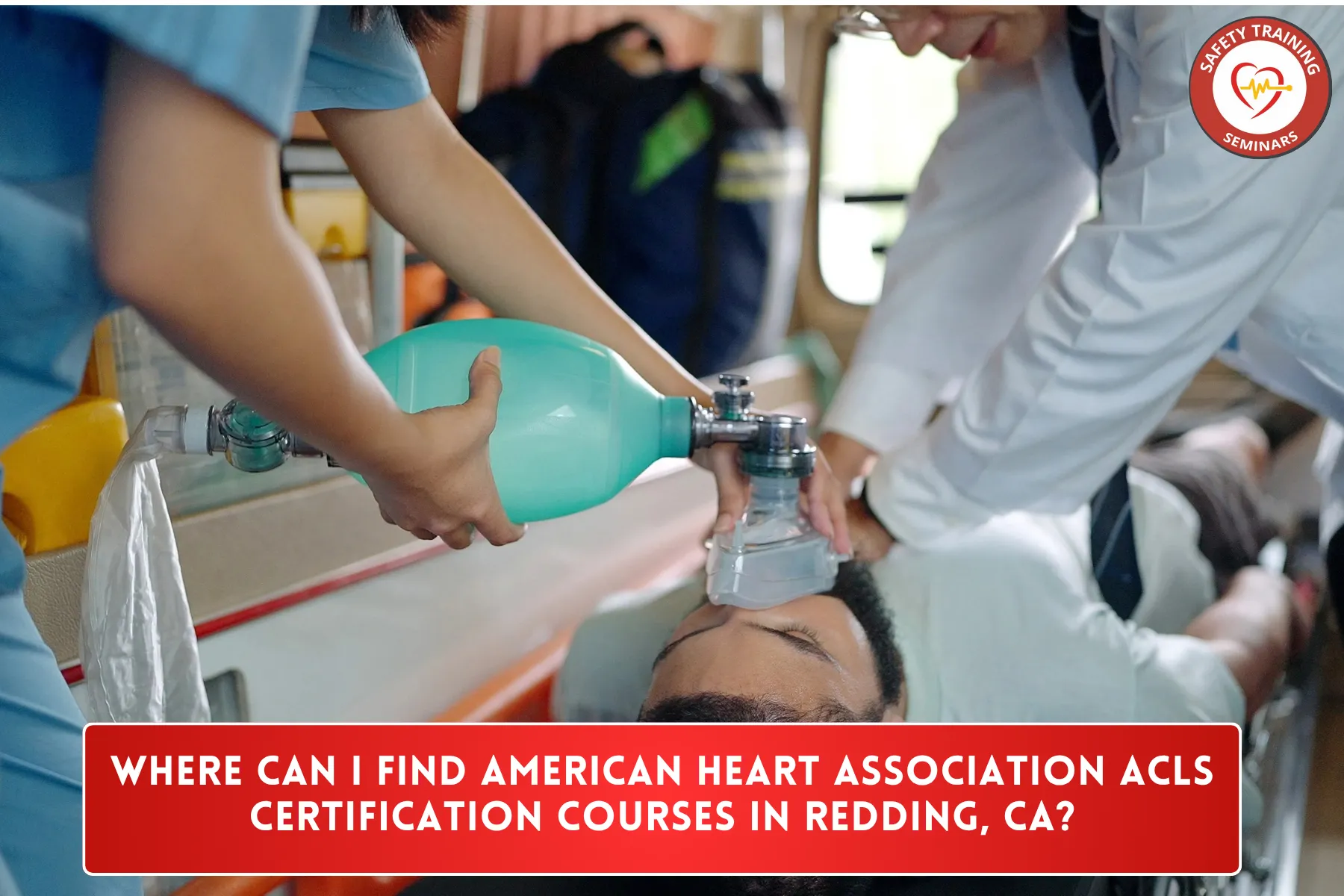
ACLS and PALS build on BLS for clinicians handling higher-acuity emergencies. ACLS is meant for professionals who manage adult cardiovascular events — emergency and critical-care nurses, physicians, and paramedics — and adds rhythm interpretation, medications, and team leadership during a resuscitation. PALS covers the same kind of advanced response for infants and children, for providers who treat young patients. Both follow the self-guided pattern of independent study, then an in-person skills session, and whether you need either depends on your role and setting. You can see how the ACLS and PALS training options in Redding are structured if you’re on a provider track.
CPR, AED, and First Aid
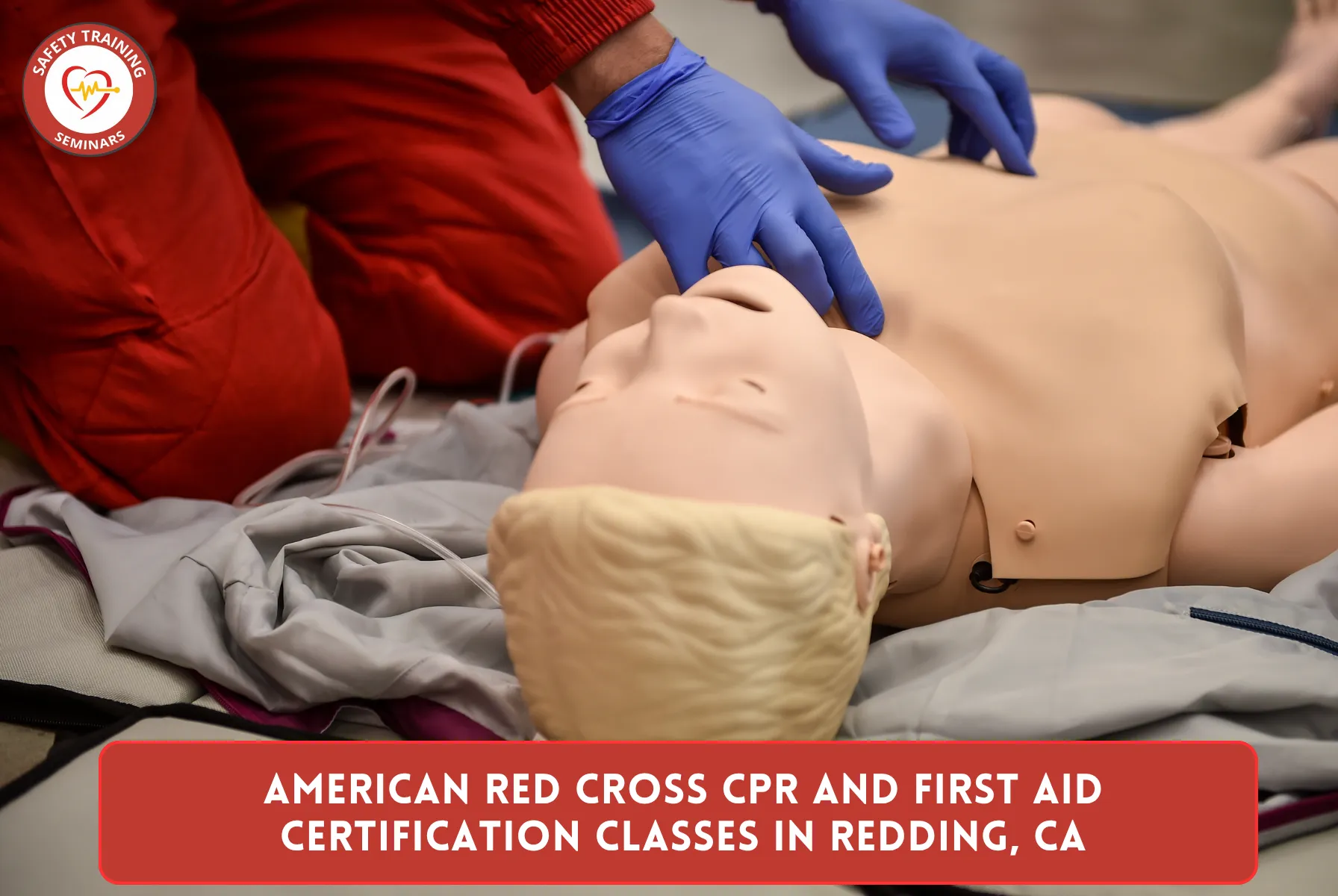
A large share of people who need training never set foot in a hospital. Teachers, coaches, childcare providers, gym staff, ranch and outdoor workers, office teams, and family caregivers often complete CPR/AED or First Aid to meet a workplace rule or to be ready when help is farther away — a real consideration in rural parts of the region. These courses teach compressions, rescue breathing, defibrillator use, and everyday injury care, no medical background needed. Since employers accept different versions, ask which course and card yours expects before signing up.
Picking the Right Course
The wrong class wastes a trip and a fee. Here’s the usual audience for each:
| Course | Typical audience |
| BLS | Healthcare professionals and clinical students |
| ACLS | Clinicians managing adult cardiac emergencies |
| PALS | Clinicians managing pediatric emergencies |
| CPR/AED | General public and workplace staff |
| First Aid | Schools, childcare, workplaces, community members |
Treat this as a guide rather than a legal standard. What you need can depend on your employer, school, licensing board, or healthcare organization, so confirm the required course and format before you pay. When unsure, the office asking for your certification can tell you which one to complete.
Self-Guided vs. Classroom vs. Online-Only
The three approaches aren’t interchangeable:
- Self-Guided Learning combines independent online study with an in-person skills session for provider courses. You set the pace of the reading but still prove your skills face to face.
- Traditional classroom training keeps instruction and hands-on work in one scheduled, instructor-led session — a good fit for people who learn best with a teacher present.
- Online-only training happens entirely on a screen. It can suit some awareness-level courses, but it often won’t meet a requirement that includes a hands-on skills check, which is common for provider certifications.
None of these is automatically better. The right one depends on your schedule, how you learn, and what your certifying body accepts.
What This Means for Redding Learners
Distance is the deciding factor for a lot of people here. When the nearest training center is a drive away, finishing the reading at home and reserving one trip for the skills session saves hours on the road. A paramedic covering a rural district, a clinic nurse in Anderson or Cottonwood, a teacher in Shasta Lake, or a parent in Palo Cedro can all handle the online portion around work and family, then come in once. Renewals are especially convenient — when you already know the material, the in-person visit stays short. For workplaces that keep staff current, the flexible schedule helps certify a whole team without shutting down for a day.
Safety Training Seminars in Redding
If you’re weighing a local option, Safety Training Seminars has a Redding location at 1135 Pine Street, Suite 207, Redding, CA 96001. As you consider it, keep your focus on what affects your certification: the course you need, whether it includes the hands-on skills your role requires, and the card or eCard you’ll receive at the end. Confirm the course format and that the completion documentation will be accepted by your employer or school before registering. Lining the class up with your requirement is the most useful step you can take, especially if you’re driving in from a surrounding community.
Frequently Asked Questions
Is Self-Guided Learning available for BLS, ACLS, and PALS? Yes. All three provider courses can be completed through AHA Self-Guided Learning. You finish the cognitive coursework on your own, then complete an in-person skills session for the certification. Because the courses differ in content and requirements, choose the one that fits your clinical role and confirm the details before enrolling.
I’d drive in from out of town — can I finish the online part first? Yes. The usual order is to complete the cognitive module first, then come in for the hands-on skills session. That’s exactly why the format suits people traveling from surrounding communities: the reading is done before you leave home, and the on-site visit stays brief. Confirm the sequence with the provider for your course.
Can someone from a nearby town use a Redding training center? Yes. Learners from Anderson, Shasta Lake, Cottonwood, Red Bluff, and other north-state communities can train at a Redding location, which serves as a regional hub for the area. It’s still wise to confirm course availability and scheduling before making the drive.
Do I need BLS or a general CPR course? It depends on your role. BLS is generally for healthcare workers and clinical students, while CPR/AED classes are aimed at the public and most workplaces. If a job, school, or licensing body requires the training, ask which course and card they accept so you don’t complete the wrong one.
Is an online-only certificate enough for a healthcare position? Usually not. Many provider roles require a hands-on skills check that a fully online course can’t deliver. If your position calls for BLS, ACLS, or PALS, verify whether an online-only certificate is accepted — in most clinical settings it won’t stand on its own.
Where to Go From Here
Self-Guided Learning keeps the hands-on skills that many certifications require, while an online-only course may leave them out. Before registering anywhere in Redding, confirm which course your employer, school, or licensing organization requires, then check that the format you pick includes those in-person skills. With that settled, comparing what Safety Training Seminars offers locally — and matching it to your role and travel plans — makes the rest of the decision simple.