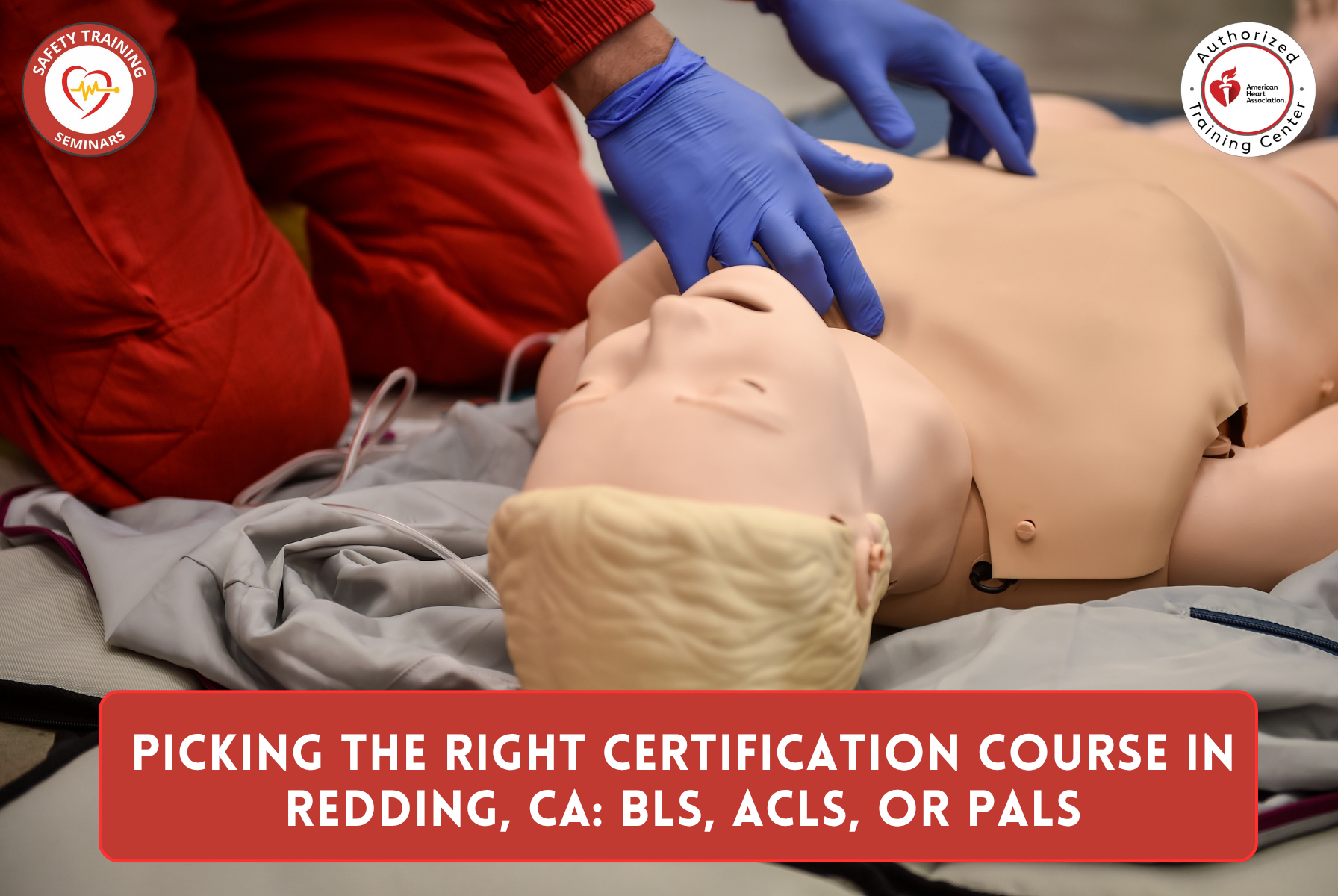
Selecting the correct resuscitation or emergency training course in Redding, California, depends primarily on your clinical role, employer expectations, and patient population. While Basic Life Support (BLS) provides the foundational skill set required across almost all direct healthcare roles, Advanced Cardiovascular Life Support (ACLS) and Pediatric Advanced Life Support (PALS) target specific advanced care settings.
Choosing the wrong class can delay employment onboarding or result in unaccepted credentials. This guide outlines how to determine whether you need BLS, ACLS, or PALS, how non-clinical workers should approach CPR requirements, and what to expect when taking a course in Shasta County.
Key Takeaway: BLS is the mandatory core credential for nurses, medical assistants, dental professionals, and students providing direct patient care. ACLS adds advanced cardiac algorithms and pharmacology for adult emergency care, while PALS focuses on pediatric emergencies. Always verify course acceptance with your employer or school before enrolling.
Defining the Core Certification Tracks
Understanding the distinct scope of each life support curriculum helps prevent booking an unnecessary or incorrect course.
Basic Life Support (BLS)
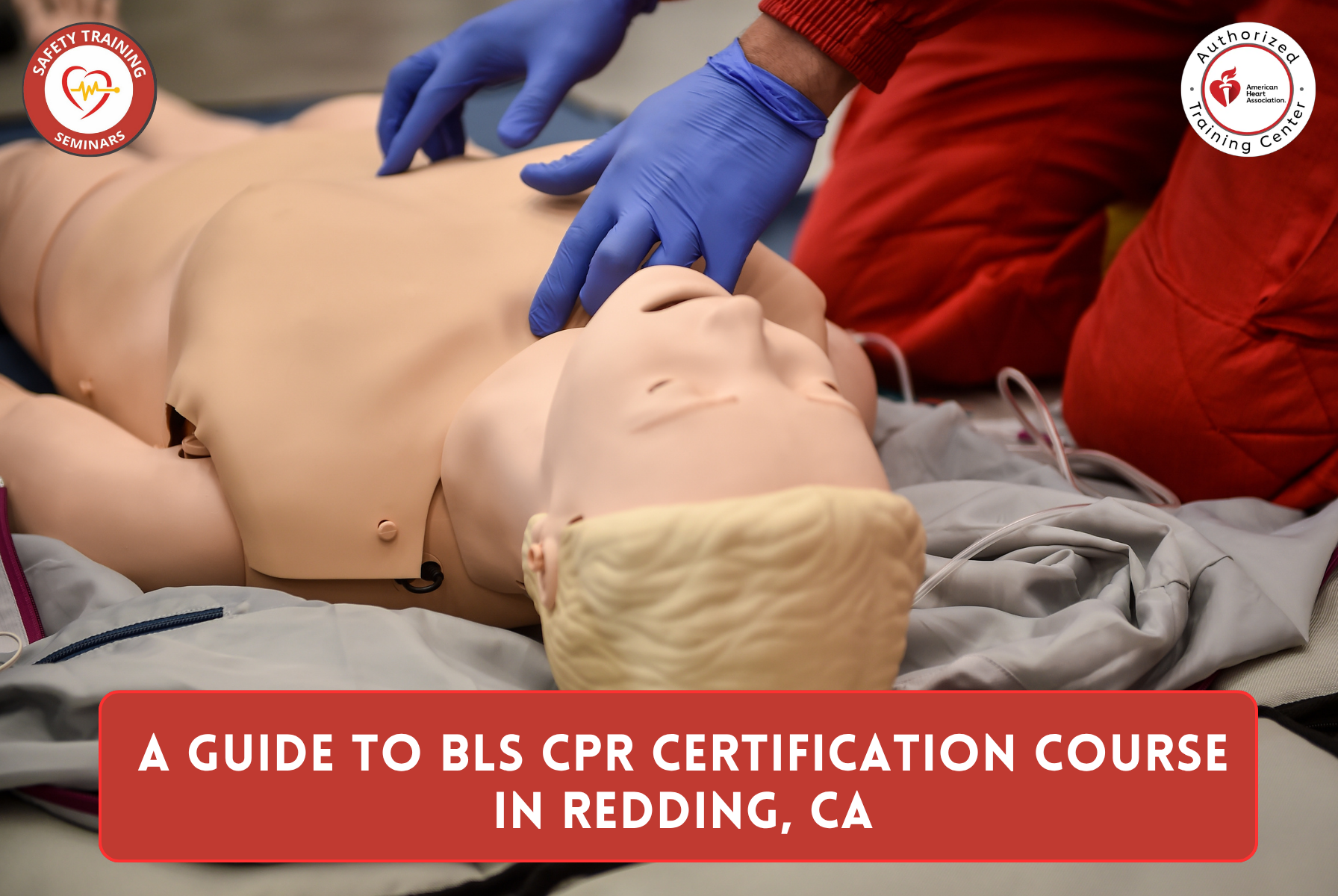
BLS focuses on fundamental, high-quality resuscitation techniques. Participants learn single-rescuer and team-based CPR, bag-valve-mask (BVM) ventilation, automated external defibrillator (AED) operation, and foreign-body airway obstruction management for adults, children, and infants.
Advanced Cardiovascular Life Support (ACLS)
ACLS expands upon BLS fundamentals to cover complex adult cardiovascular emergencies. Training includes electrocardiogram (ECG) rhythm recognition, airway management devices, emergency pharmacology (such as epinephrine and amiodarone), cardioversion, defibrillation, and post-cardiac arrest management.
Pediatric Advanced Life Support (PALS)
PALS addresses critical emergency care for pediatric patients, including infants and children. Coursework covers systemic pediatric assessment, recognition of respiratory distress and failure, shock management, vascular access options, and pediatric resuscitation algorithms.
Comparing BLS, ACLS, and PALS Course Features
| Feature / Metric | Basic Life Support (BLS) | Advanced Cardiovascular Life Support (ACLS) | Pediatric Advanced Life Support (PALS) |
| Target Patient Age | Adults, Children, Infants | Adults | Infants and Children |
| Core Focus | High-quality CPR & AED | ECG interpretation & pharmacology | Pediatric assessment & algorithms |
| Prerequisites | None (Introductory) | Valid BLS Card & ECG knowledge | Valid BLS Card & PALS pharmacology |
| Clinical Setting | General care, clinics, dental | ICU, ER, Telemetry, EMS | PICU, Pediatric ER, Urgent Care |
| Typical Audience | RNs, CNAs, EMTs, Dental Teams | ER Nurses, Physicians, Paramedics | Pediatric Nurses, ER Staff |
Mapping Your Profession to the Required Course
Employer policies and clinical scope drive specific certification requirements.
Who Needs a BLS CPR Certification Course?
A BLS CPR Certification Course is mandatory for almost all clinical healthcare providers. This includes registered nurses (RNs), licensed vocational nurses (LVNs), certified nursing assistants (CNAs), physical therapists, medical assistants, dental hygienists, emergency medical technicians (EMTs), and students entering health science programs.
Who Needs ACLS Certification?
ACLS is required for healthcare professionals participating in or directing adult cardiac arrest management or critical care delivery. Personnel in intensive care units (ICU), emergency departments (ED), cardiac catheterization labs, telemetry units, and advanced pre-hospital transport (paramedics) generally must hold active ACLS certification in addition to BLS.
Who Needs PALS Certification?
PALS targets clinicians delivering advanced emergency care to children and infants. Pediatric ER nurses, pediatric ICU staff, emergency physicians, paramedics, and specialized outpatient pediatric personnel typically require PALS certification.
Non-Clinical and General Public CPR Options
Non-healthcare personnel—such as childcare providers, schoolteachers, fitness instructors, industrial workers, and parents—do not require clinical BLS or advanced credentials. Instead, OSHA compliance or California state childcare regulations (such as EMSA standards) call for general Heartsaver CPR, AED, and First Aid courses.
Classroom Training vs. Blended Online Learning
Modern training standards accommodate busy clinical work schedules through two primary formats.
In-Person Instructor-Led Training
Traditional classroom training involves in-person lectures, instructional videos, peer practice on manikins, and immediate instructor evaluation. This setup benefits individuals taking a course for the first time or those who prefer collaborative, face-to-face feedback.
Blended Learning Formats
Blended learning combines adaptive, self-paced online cognitive coursework with a brief in-person practical skill evaluation. You complete the theoretical modules on a computer at your convenience and then attend a practical session to verify physical competency in chest compressions, ventilation, and equipment operation.
Beware of Non-Compliant “100% Online” Cards
Be cautious of third-party vendors selling “fully online” certificates without a hands-on physical evaluation. Most healthcare systems, hospital credentialing offices, and state licensing boards in California reject certifications earned without hands-on verification on an approved manikin.
Serving Healthcare Professionals in Redding and Neighboring Areas
Redding acts as the primary regional healthcare center for Shasta County and surrounding rural northern California communities. Regional hospitals, specialty clinics, and emergency transport providers depend on local, accessible training options to maintain uninterrupted staffing compliance.
Healthcare workers and nursing students commuting from nearby towns such as Anderson, CA or Shasta Lake, CA often need flexible class schedules that fit around long hospital shifts or clinical rotations. Having a central local training center eliminates the burden of traveling long distances to satisfy mandatory renewal cycles.
Completing Your Course with Safety Training Seminars
For professionals seeking reliable training options locally, Safety Training Seminars provides official American Heart Association courses directly in Shasta County.
Location Details:
Safety Training Seminars Redding CPR Training Center Address: 1135 Pine Street, Suite 207, Redding, CA 96001
The Redding center offers BLS, ACLS, PALS, NRP, and Heartsaver CPR First Aid courses. Flexible scheduling includes options for both traditional classroom sessions and convenient blended learning skills assessments.
Attending an established local facility ensures your practical evaluation satisfies employer onboarding rules, clinical program prerequisites, and state licensing boards. You can review available dates, select the required course tier, and complete enrollment online before attending your physical session.
Frequently Asked Questions
How long does an AHA BLS, ACLS, or PALS certification remain valid?
Official American Heart Association certifications remain valid for two years. Certification expires on the final day of the month in which the card was issued.
Can I take ACLS or PALS if my BLS card is expired?
No. Advanced courses assume proficiency in basic CPR and ventilation techniques. You must hold a current BLS card or complete a combined BLS renewal alongside your ACLS or PALS session.
Are blended learning certificates accepted by Redding healthcare employers?
Yes, provided the blended course includes an official in-person hands-on skills verification on an approved manikin. Employers accept certificates from authorized training facilities that verify physical competence.
What should I bring to my hands-on skills evaluation in Redding?
Bring a printed or digital copy of your online course completion certificate if participating in a blended learning class. Wear comfortable clothing suitable for performing physical CPR compressions on the floor or a table.
Do teachers and daycare workers in Shasta County need BLS?
Generally, no. Educators and childcare providers usually require a general CPR, AED, and First Aid course tailored for occupational safety and California EMSA compliance rather than a healthcare-level BLS credential.
Final Steps for Booking Your Class
Choosing between BLS, ACLS, and PALS depends entirely on your daily patient contacts, employer requirements, and scope of practice. General healthcare staff and students should start with BLS, while clinicians in adult or pediatric emergency units should add ACLS or PALS accordingly.
Always review your facility’s written job description or academic program requirements prior to enrolling. When you are ready to complete your training, visit the official course-location page for Safety Training Seminars in Redding to check current course schedules and reserve your spot.